
Words by Dr. Conny Scheffler and Caitlin Lichimo. Photos by Emma Jarek.
How do we manage landscapes for wildlife and people? The UBC Research Excellence Cluster on Collaborative Coexistence for People and Nature tackles complex human-wildlife trade-offs through partnership-based research with diverse stakeholders and key decision-makers, aimed at designing inclusive and effective conservation solutions to benefit people and nature alike.
Conserving biodiversity is a critical component of sustainable land management and resource use. Such land stewardship cultivates specific ecological interactions to sustain production, often based on traditional and Indigenous knowledge.
The tradeoffs between agricultural diversification and human-wildlife coexistence
The UBC Cluster on Collaborative Coexistence for People and Nature tackles complex trade-offs through partnership-based research with diverse stakeholders and key decision-makers.

In particular, the Agricultural Diversification Team within the cluster is working with research partners within the Fraser Valley of British Columbia. While diversification practices, such as restoring trees as riparian buffers and cover cropping, are known to improve conditions for biodiversity and produce important ecosystem services for farmers, these effects depend strongly on the specifics of each farming and ecological system.
Even when these practices improve farmers’ bottom line, many other barriers may prevent adoption, such as costs, social networks, policies, and incentives. The Agricultural Diversification Team is co-developing new methods and approaches for community-engaged research to clarify these context-dependent barriers.
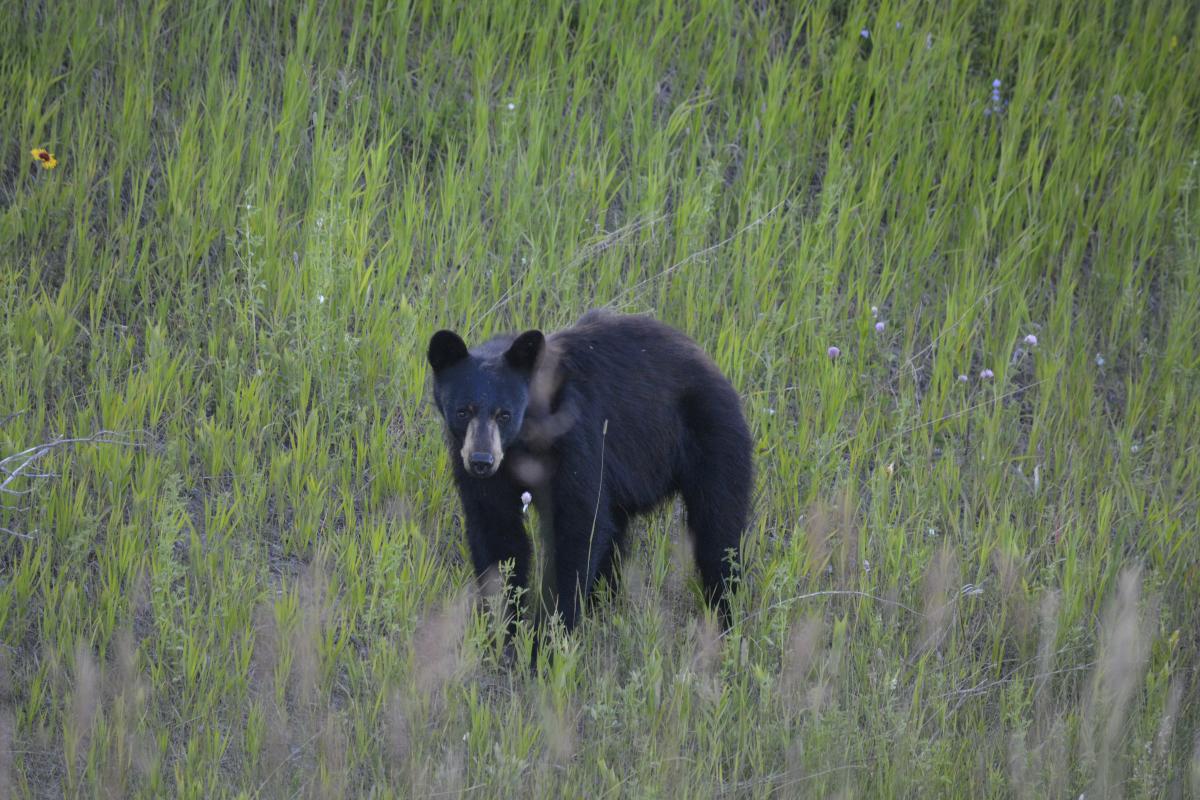
Additionally, while agricultural diversification may mitigate biodiversity loss by providing habitat and promoting connectivity, it can also exacerbate human-wildlife conflict by increasing proximity between humans and wildlife. For example, adding riparian corridors through agricultural landscapes may increase bear incursions into blueberry fields. Outdoor recreation and developments at the wildland-urban boundary may facilitate positive access to nature but may also increase the potential for human-wildlife conflict. Such conflicts can lead to property loss, human injury or even death, as well as a reduction in wildlife populations (for example, between 500-600 bears are killed in BC annually).
This is why the Wildlife Conflict and Coexistence Team within the cluster assesses the effectiveness of novel mitigation measures in conflict-prone landscapes to enhance understanding of urban wildlife behavioural ecology, influence of interventions on human behavior and tolerance for coexistence, and the value of coexistence strategies.
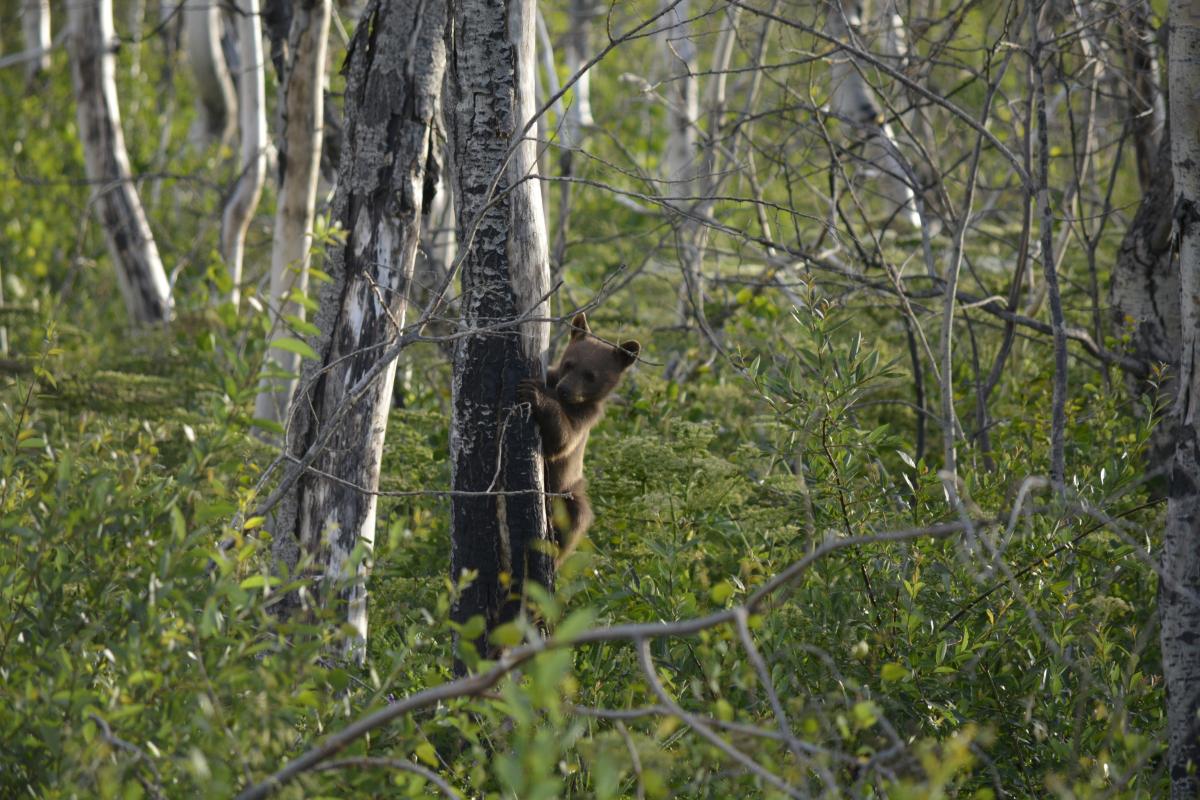
Integrating Indigenous perspectives for land stewardship practices
In October 2025, the cluster will host a symposium entitled ‘Agricultural landscape diversification and human-wildlife coexistence: exploring synergies and tradeoffs’, featuring a UBC Indigenous faculty-led workshop.
During the symposium, both the Agricultural Diversification Team and the Wildlife Conflict and Coexistence Team will discuss the conflicting aspects of conservation in human-dominated landscapes, while the workshop will learn from and integrate Indigenous perspectives into managing human-wildlife coexistence within agricultural working landscapes as participants draft a conceptual manuscript on this topic for publication.
The symposium will be open to the UBC Community to attend. Sign up for UBC's Sustainability Newsletter to make sure you don't miss out.